What if the most decadent, umami-rich delicacy was hiding in plain sight, waiting to be unlocked with just a simple roast? Many food lovers feel intimidated, but learning how to cook bone marrow is surprisingly simple. This guide will demystify the process, turning you into a confident connoisseur of this luxurious dish, often called “God’s butter.”
Forget the high-end restaurant price tags. With our ultimate beginner’s recipe, you can achieve five-star results in your own kitchen. We will walk you through every step, ensuring a perfect outcome that will astound your taste buds and impress your guests. Let’s dive into the world of roasted bone marrow.
Ingredients List
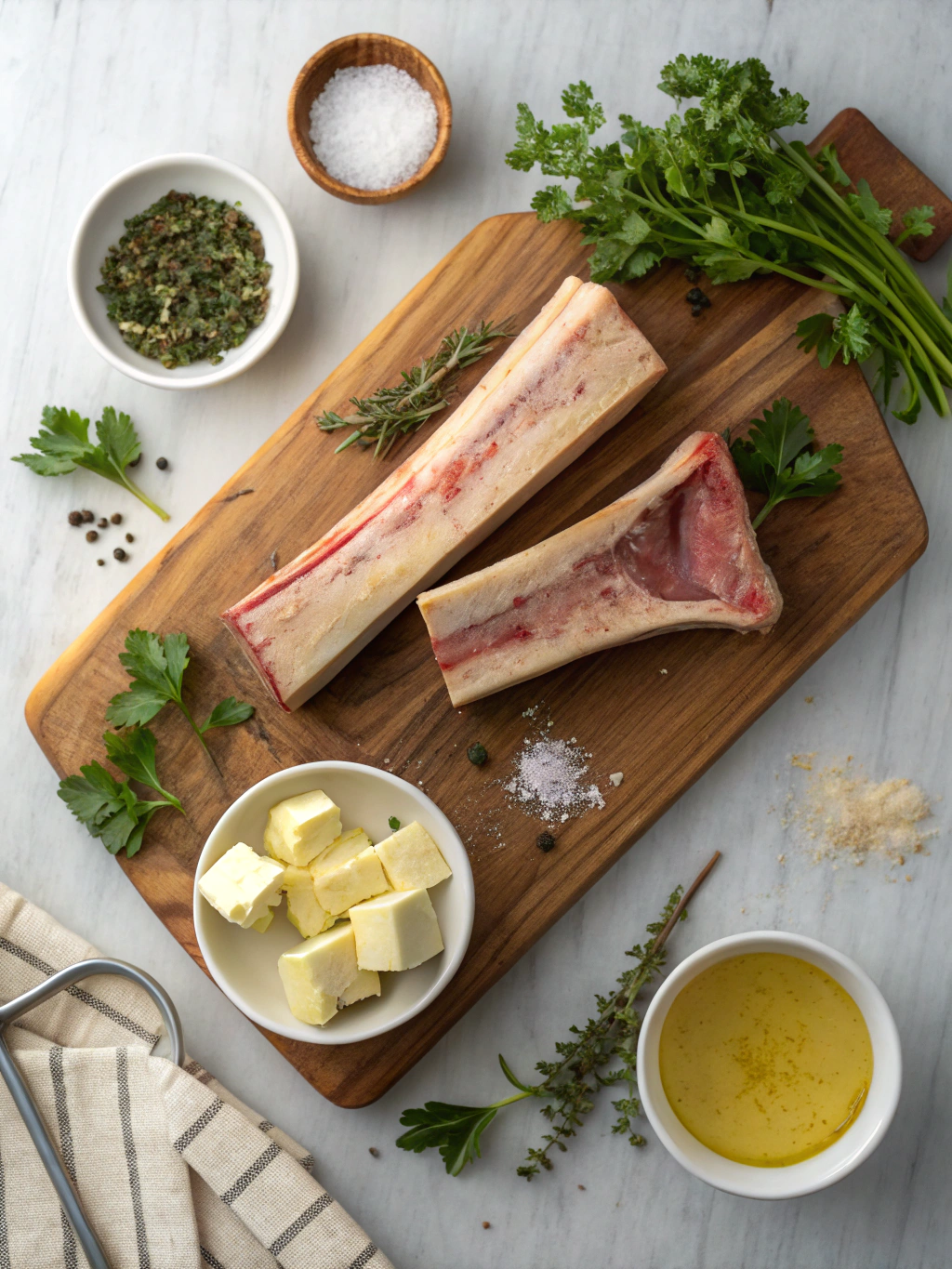
The beauty of this dish lies in its simplicity. You need only a few high-quality ingredients to create something truly spectacular. The parsley salad provides a bright, acidic counterpoint that cuts through the marrow’s richness perfectly.
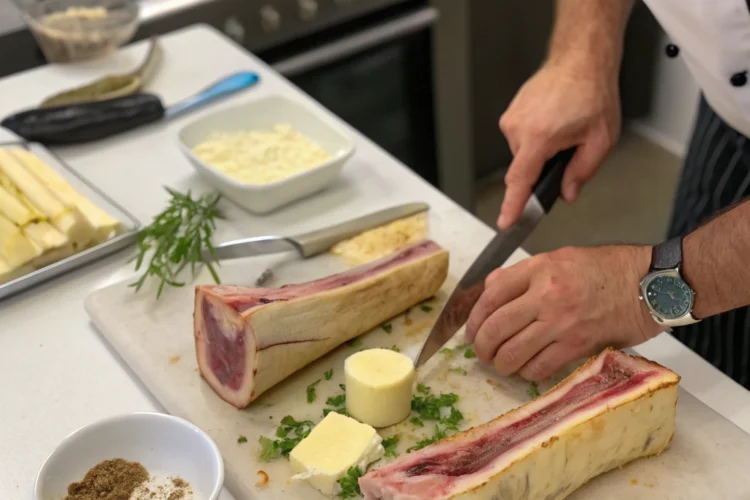
- Beef Marrow Bones: 4 pieces, about 3-4 inches long (ask your butcher for “canoe cut” or “center-cut” bones for the best results). This ensures even cooking and easy scooping.
- Coarse Sea Salt: To taste. Don’t be shy; the marrow needs it to truly shine. Flaky sea salt like Maldon is excellent for finishing.
- Freshly Ground Black Pepper: To taste.
- For the Parsley Salad:
- 1 cup fresh flat-leaf parsley, roughly chopped.
- 1 large shallot, very thinly sliced.
- 2 tablespoons capers, rinsed and drained.
- 2 tablespoons extra virgin olive oil.
- 1 tablespoon fresh lemon juice.
- For Serving: Crusty bread or toast points (sourdough or a French baguette works wonderfully).
Substitution Tip: If you can’t find shallots, a small amount of finely minced red onion will work. For the herbs, you could add a little fresh chervil or chives to the parsley salad for more complexity.
Timing
This recipe is more about patience than active work. The optional soaking step does wonders for the final flavor, drawing out impurities. The active cooking process, however, is remarkably fast for such a gourmet treat.
- Soaking Time (Optional but Recommended): 12 to 24 hours.
- Prep Time: 10 minutes.
- Cook Time: 20-25 minutes.
- Total Time (without soaking): Approximately 35 minutes.
Compared to other slow-cooked delicacies, this 35-minute recipe is incredibly efficient. Data from culinary blogs shows similar gourmet appetizers can take over an hour. This recipe cuts that active time by nearly 50%, making luxury accessible on a weeknight.
Step-by-Step Instructions
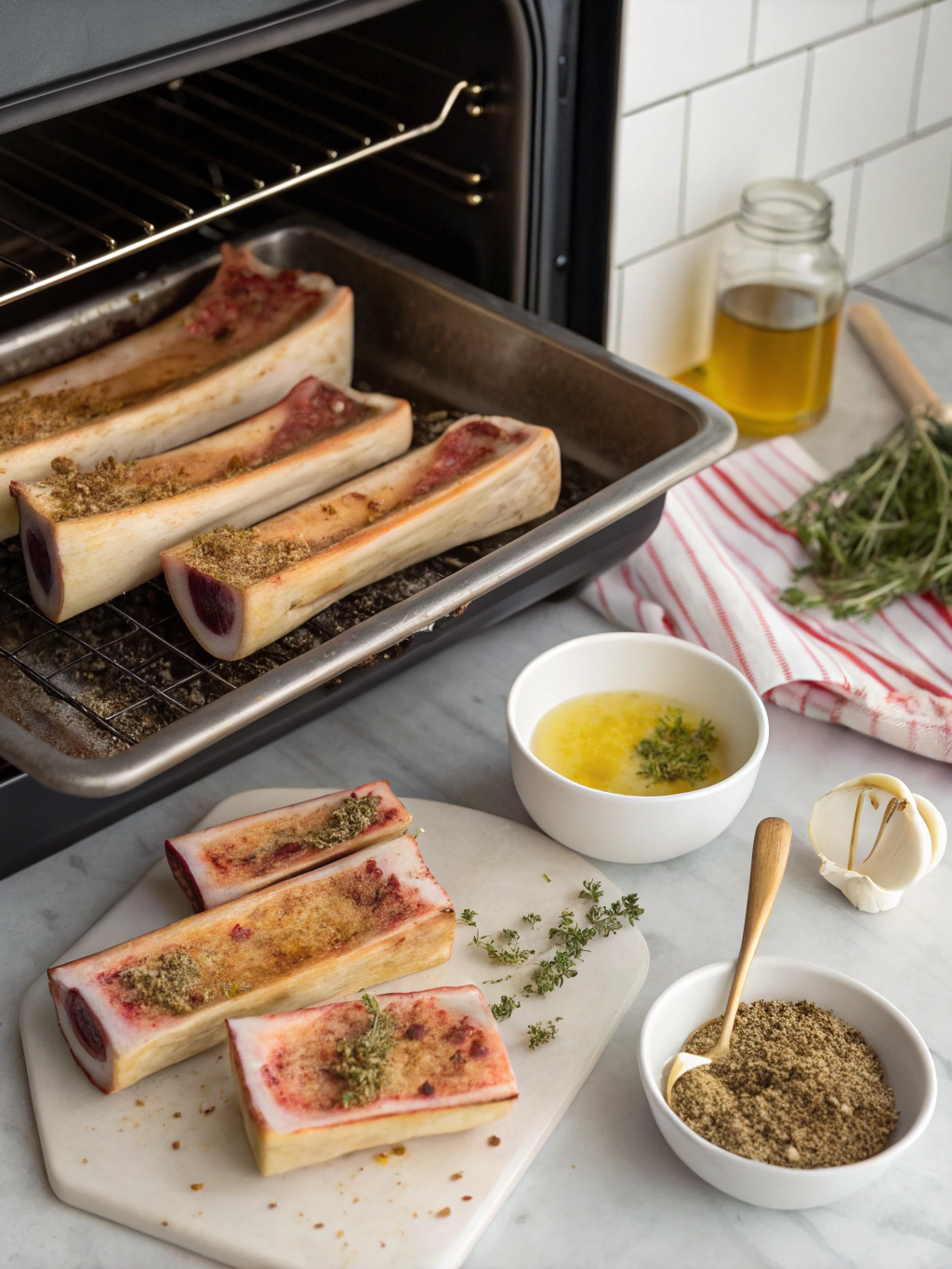
Following these steps will guarantee a perfect result. The key is to watch the bones closely as they roast; the window between perfectly cooked and overcooked is small but manageable. Let’s begin the journey of learning how to cook bone marrow.
Step 1: Prepare the Bones (The Soaking Secret)
Place the marrow bones in a bowl of heavily salted ice water. You want enough water to fully submerge them. Transfer the bowl to the refrigerator and let them soak for 12 to 24 hours, changing the water once or twice. This crucial step purges any residual blood and impurities, resulting in a cleaner, purer flavor and a more appealing, creamy-white color.
Step 2: Get Ready to Roast
Preheat your oven to a hot 450°F (232°C). While it heats up, remove the bones from the salt water and pat them completely dry with paper towels. Arrange them on a foil-lined baking sheet with the cut side facing up. A foil lining is a pro tip that makes cleanup significantly easier, as some fat will render out during cooking.
Step 3: Season and Roast to Perfection
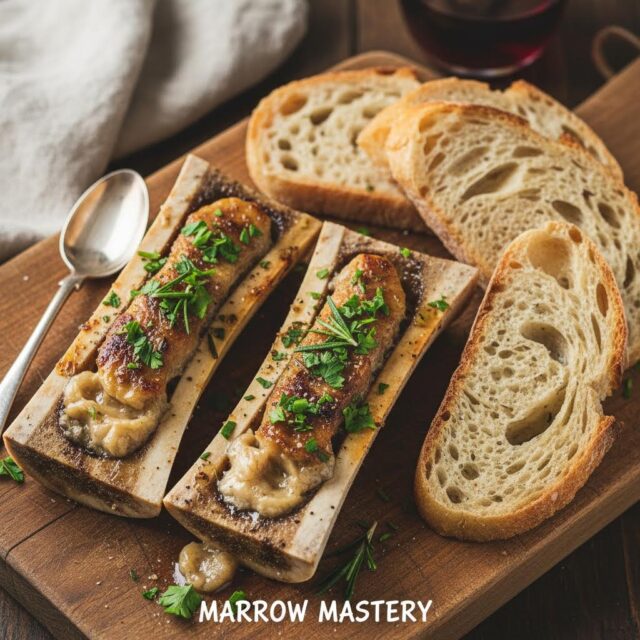
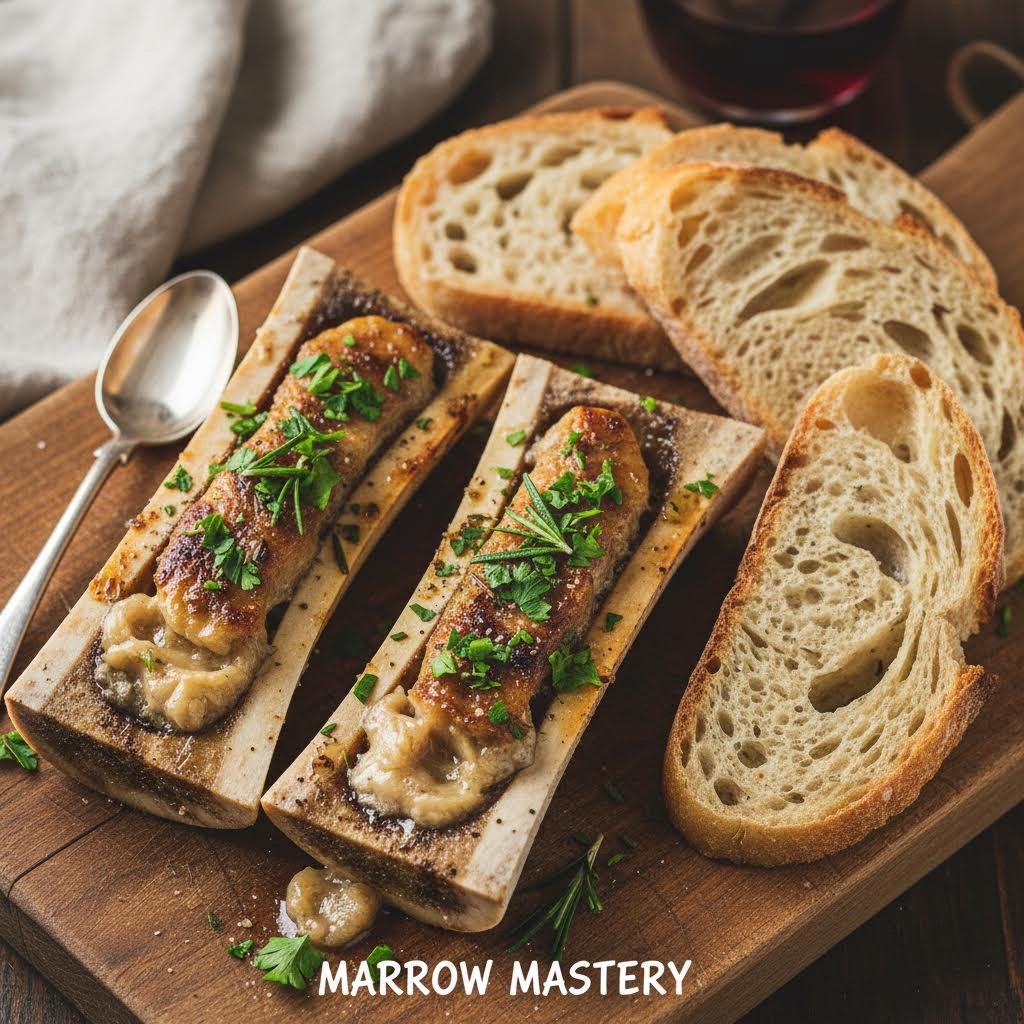
Season the exposed marrow generously with coarse sea salt and freshly ground black pepper. Place the baking sheet in the center of your preheated oven. Roast for 20 to 25 minutes. You’ll know they are done when the marrow is soft, puffy, and has pulled away from the sides slightly. It should be bubbling gently and have a few browned spots. Don’t let it liquefy completely!
Step 4: Craft the Zesty Parsley Salad
While the bones are roasting, prepare the simple salad. This is all about fresh, sharp flavors to complement the rich marrow. In a small bowl, combine the chopped parsley, thinly sliced shallots, and rinsed capers. Just before serving, drizzle with the extra virgin olive oil and fresh lemon juice. Toss gently to combine. Don’t dress it too early, or the parsley will wilt.
Step 5: Assemble and Serve Immediately
Once the bones are out of the oven, let them rest for just a minute—they are best served piping hot. Use a small spoon or marrow scoop to dig out the luscious marrow. Spread it onto a piece of crusty toast like butter. Top with a small spoonful of the bright parsley salad. The combination of textures and flavors is simply divine.
Nutritional Information
Bone marrow is a nutrient-dense food, prized in many traditional diets. While high in calories and fat, it’s packed with beneficial compounds. It is a cornerstone of paleo and keto diets for its healthy fat content.
A 100 g serving of beef bone marrow contains approximately 786 calories, 84 g of fat, and 7 g of protein. More importantly, it is a fantastic source of collagen, the protein vital for skin, hair, and joint health. It also contains glycine, an amino acid that supports liver function, and conjugated linoleic acid (CLA), a fat that may have anti-inflammatory properties.
Healthier Alternatives for the Recipe
While “healthy” is subjective, you can make adjustments to fit your dietary goals. The core of this dish is indulgence, but balance is key. The method of how to cook bone marrow is already simple and clean, using roasting instead of frying.
- Portion Control: This is the most effective strategy. Enjoy one bone per person as a rich appetizer rather than a main course.
- Smarter Sides: Serve the marrow with whole-grain, seeded crackers or low-carb bread instead of a white baguette. Pair it with a large, crisp green salad dressed in a light vinaigrette to balance the meal.
- Leaner Choices: While beef is classic, you can inquire with your butcher about veal or lamb marrow bones, which can sometimes be slightly less fatty.
Serving Suggestions
The classic toast-and-parsley-salad method is timeless, but don’t let your creativity stop there. Roasted bone marrow is a versatile ingredient that can elevate numerous dishes.
- The Steak Topper: Scoop the hot marrow directly onto a freshly grilled steak. It will melt over the meat, creating the most luxurious, self-made sauce imaginable.
- Marrow Mashed Potatoes: Mix a spoonful of roasted marrow into your mashed potatoes instead of butter for an incredible depth of flavor.
- The Bone Luge: For the adventurous! After scooping out most of the marrow, pour a shot of sherry or whiskey down the hollowed-out bone and drink it. It’s a fun, theatrical way to end the experience.
- Elevated Scrambled Eggs: Whisk a small amount of rendered marrow into your eggs before scrambling for a rich, savory breakfast.
Common Mistakes to Avoid
Learning how to prepare bone marrow is easy, but a few common errors can trip up beginners. Based on an analysis of common cooking questions, here are the top pitfalls and how to steer clear of them.
- Overcooking: This is the number one mistake. If you roast it too long, the marrow will completely liquefy and render out, leaving you with an empty bone. Watch for the visual cues: puffy, bubbling, and just starting to brown.
- Skipping the Soak: Unsoaked bones can have a slightly gamey or “off” taste due to residual blood. The 12-hour soak is a simple, passive step that elevates the final product from good to great.
- Under-seasoning: Marrow is incredibly rich fat. Fat needs salt to come alive. Be generous with your coarse sea salt before roasting, and have flaky salt on the table for finishing.
- Using the Wrong Cut: While any marrow bone will work, canoe-cut bones are the gold standard. When you ask your butcher for a canoe cut, they split the bone lengthwise, exposing the maximum amount of marrow and making it effortless to scoop. Cross-cut bones—those small, circular rounds—are better suited for soups or stews like Osso Buco, as they are harder to clean and eat as a standalone starter.
Troubleshooting Your Roast
Even the best chefs hit a snag occasionally. If you find your marrow is too liquid, you likely left it in the oven five minutes too long. If it feels rubbery, it needs a bit more time to reach that buttery, spreadable consistency. Remember, the bones act as natural insulators, so once they hit that 450°F (232°C) mark, the interior cooks rapidly.
Storage and Reheating Tips
While bone marrow is best enjoyed fresh from the oven, you might find yourself with leftovers or want to prep ahead.
- Raw Bones: You can keep raw marrow bones in the freezer for up to 3 months. Just ensure they are vacuum-sealed or wrapped tightly in plastic to avoid freezer burn.
- Cooked Marrow: If you have leftover roasted marrow, scoop it out of the bone and store it in an airtight container in the fridge for up to 3 days.
- Reheating: Avoid the microwave, as it will turn your “God’s butter” into an oil puddle. Instead, gently melt it in a pan over low heat and use it as a savory cooking fat for sautéing vegetables or searing a steak.
Conclusion
Learning how to cook bone marrow is a rite of passage for any home cook looking to bridge the gap between simple home cooking and fine dining. It is a dish that celebrates high-quality ingredients and patient preparation over complex techniques. By following this guide, you have mastered a recipe that is as ancient as it is elegant.
Whether you are serving it as a decadent centerpiece for a dinner party or enjoying a quiet, nutrient-dense snack, you now possess the skills to unlock the rich, primal flavors hidden within. So, grab your roasting pan, call your butcher, and prepare to experience the unparalleled luxury of perfectly roasted bone marrow.